二元樹
範圍 — 二元樹特有的思路:DFS 的狀態往哪個方向流(往下還是往上),以及建立在這個基礎上的 11 個結構化模板。 另見:tree.md — 一般性的樹概念與走訪策略;tree2.md — 各模式現成的模板;bst.md — 樹有序的情況。
LeetCode 題目清單
時間複雜度
| 資料結構 | 搜尋 | 插入 | 刪除 | 最小/最大 |
|---|---|---|---|---|
| Binary Tree | O(n) | O(n) | O(n) | O(n) |
一般(未排序)的二元樹 — 沒有順序性,所以每個操作都可能走遍所有節點。平衡樹會把搜尋/插入/刪除降到 O(log n)。空間是儲存的 O(n) 加上遞迴堆疊的 O(h)。有序的版本見 bst.md。
總覽
二元樹是一種階層式資料結構,每個節點最多有兩個子節點(左與右)。它是 BST、堆積等許多進階資料結構的基礎,也是理解樹相關演算法的關鍵。
關鍵性質
- 複雜度:見上面的時間複雜度表
- 核心想法:具有遞迴性質的階層結構
- 什麼時候用:階層式資料、搜尋、排序、決策、運算式解析
參考資料
0) 概念:DFS 的狀態往哪個方向流? 優先度 5/5 — 必備 — 幾乎每一輪面試都會出現
選模板之前先回答一個問題:一個節點需要的資訊,是從它上面來的,還是從它下面來的? 光是這一個答案,就能把幾乎所有樹 DFS 題目分成三種形狀。
0-1) 三種 DFS 形狀
| 形狀 | 狀態流向 | 函式簽名 | 答案從哪裡讀 | 經典 LC |
|---|---|---|---|---|
| A — 由上而下、回看 | 往下,透過 parent 參數 | dfs(node, parent, state) |
從全域變數 | 112、129、1448、298 |
| B — 由上而下、前看 | 往下,由父節點決定 | dfs(node, state) |
從全域變數 | 298、687 |
| C — 由下而上(後序) | 往上,透過回傳值 | dfs(node) -> state |
從回傳值(+ 全域變數) | 104、543、124、337 |
A 和 B 只是同一種由上而下走訪的兩種寫法。 C 才是真正不同的演算法。在 A/B 之間選是風格問題;在由上而下與由下而上之間選是正確性問題。
0-2) A vs B — 回看 vs 前看
兩者都能解 LC 298,時間都是 O(n)、空間都是 O(h)。差別在於父子比較這件事由誰負責。
# python
# LC 298 - Binary Tree Longest Consecutive Sequence
# STYLE A: LOOK-BACK — recurse first, compare against the parent I was handed
# time = O(n), space = O(h)
class Solution(object):
    def longestConsecutive(self, root):
        if not root:
            return 0
        self.max_len = 0
        self.dfs(root, None, 0)      # seed: no parent -> streak resets to 1
        return self.max_len

    def dfs(self, node, parent, curr_len):
        if not node:                 # <-- null handled HERE (base case)
            return
        # I decide MY OWN state from my parent's
        if parent and node.val == parent.val + 1:
            curr_len += 1
        else:
            curr_len = 1             # streak broke -> restart AT me
        self.max_len = max(self.max_len, curr_len)

        # ALWAYS recurse both sides - a broken streak can restart anywhere below
        self.dfs(node.left, node, curr_len)
        self.dfs(node.right, node, curr_len)
# python
# LC 298 - Binary Tree Longest Consecutive Sequence
# STYLE B: LOOK-FORWARD — I compute each CHILD's state before calling it
# time = O(n), space = O(h)
class Solution(object):
    def longestConsecutive(self, root):
        if not root:
            return 0
        self.max_len = 0
        self.dfs(root, 1)            # seed: root is a streak of length 1
        return self.max_len

    def dfs(self, node, curr_len):
        self.max_len = max(self.max_len, curr_len)
        # I decide MY CHILDREN's state, and guard the null BEFORE recursing
        if node.left:                # <-- null handled HERE (call-site guard)
            self.dfs(node.left, curr_len + 1 if node.left.val == node.val + 1 else 1)
        if node.right:
            self.dfs(node.right, curr_len + 1 if node.right.val == node.val + 1 else 1)
並排比較
| A — 回看 | B — 前看 | |
|---|---|---|
| 誰做比較 | 子節點,比自己 | 父節點,對每個子節點比 |
| null 怎麼處理 | 基底情況 if not node: return |
呼叫端擋掉 if node.left: |
n 個節點的呼叫次數 |
2n + 1(null 也會被呼叫) | n(null 永遠不會被呼叫) |
| 額外參數 | 有 — parent(或 parent_val) |
沒有,直接讀 node.val |
| 起始呼叫 | dfs(root, None, 0) |
dfs(root, 1) |
| 比較邏輯要寫幾次 | 一次 | 兩次(左 + 右) |
| N 元樹(LC 589/1522) | for c in node.children: dfs(c, node, s) — 不用改 |
必須把比較邏輯再包進迴圈裡 |
| 圖/被改建成圖(LC 863) | 很自然 — parent = 「我從哪來」 |
很彆扭 — 沒有固定的子節點集合 |
這是實測出來的,不是嘴上說說:在一棵 15 個節點的完美樹上,寫法 A 執行了 31 次呼叫,寫法 B 執行了 15 次。多出來的那些是
None子節點。都是 O(n) — B 只是常數比較小。
該選哪一個
- 預設選 A。 轉移邏輯只有一份,擴展到 N 元樹和圖都不用改,而且
if not node這個基底情況是其他每個樹模板早就在訓練的習慣。 - 這些情況選 B:比較需要邊的兩端,而你想避開一個 null 分支 — 或者你根本不能走進某個子節點(剪枝),因為 B 是在遞迴之前就先做決定。
- A 洩漏的狀態比較少。 在 B 裡,
self.max_len必須在節點本身更新(不是在子節點),否則根節點自己的長度永遠不會被算進去。
哨兵值捷徑(以及它什麼時候會爆)
如果傳的不是節點而是一個假的父節點值,寫法 A 的 if parent and ... 就消失了:
# python
# LC 298 - the `parent_val` sentinel variant of Style A
# IDEA: seed with (root.val - 1) so the root automatically satisfies "val == parent_val + 1" -> length 1
dfs(root, root.val - 1, 0)     # no `if parent` branch needed inside dfs
⚠️ 這只在狀態取決於父節點的值時才成立。 如果你需要的是父節點的身分 — 例如 LC 993(Cousins in Binary Tree),兩個節點必須同深度但父節點不同 — 就一定要傳實際的節點。在那裡傳 parent_val,只要兩個父節點的值剛好相同,答案就會默默地錯掉。
0-3) A/B 的選擇適用於每一道樹 DFS 題嗎? — 不
A vs B 這個問題只對由上而下的題目有意義:也就是一個節點的答案,完全由從根走到它的那條路徑決定。問自己:
Can I answer for this node using ONLY what I learned on the way down?
├── YES -> Top-Down. Pick Style A or B freely (they are interchangeable).
│         Root-to-leaf sums, depth, path constraints, "ancestor so far".
└── NO, I need a fact about my SUBTREE (its height / best path / sum)
          -> Bottom-Up (Style C). A and B CANNOT express this.
             Depth, diameter, max path sum, balance, subtree aggregates.
C 的辨認特徵:某個節點的答案要把兩個子節點的結果合起來(left + right + node.val),或者節點回傳的東西跟全域變數追蹤的東西不一樣。
| LC | 題目 | 形狀 | 為什麼 |
|---|---|---|---|
| 112 / 113 | Path Sum I / II | A 或 B | 累計和從上面來 |
| 129 | Sum Root to Leaf Numbers | A 或 B | 往下累積 num*10 + val |
| 1448 | Count Good Nodes | A 或 B | 把 maxSoFar 帶下去 |
| 1026 | Max Diff Node vs Ancestor | A 或 B | 把 (min, max) 帶下去 |
| 298 | Longest Consecutive Sequence | A 或 B | 連續長度從上面來 |
| 993 | Cousins in Binary Tree | 只能 A | 需要父節點,不是它的值 |
| 863 | All Nodes Distance K | 只能 A | 樹被當成圖來走;parent = 從哪來 |
| 104 / 111 | Max / Min Depth | C | 需要子節點的高度 |
| 543 | Diameter | C | 在節點上算 left + right |
| 110 | Balanced Binary Tree | C | 比較子樹高度 |
| 124 | Max Path Sum | C | 回傳單邊,全域記錄兩邊相加 |
| 687 | Longest Univalue Path | B 和 C | 用 B 算往下的單邊,用 C 把兩邊接起來 → 見模板 9 |
| 337 | House Robber III | C | 回傳 (take, skip) 二元組 → 見模板 9 |
| 236 | LCA | C | 需要知道「p/q 有沒有在我下面被找到」 |
LC 298 是少見的三種寫法都能解的題目 — 它的路徑嚴格往下(所以由上而下可行),而且一棵子樹往下最長的連續段也有明確定義(所以由下而上也可行)。跟下面**模板 9(樹 DP — 由下而上回傳多個狀態)**的 C 版本對照一下 — 它是把
cur_len往上回傳,而不是往下串。大部分題目只吃一種形狀。
卡住時把 A 改成 C
如果由上而下的嘗試需要子樹的資訊,機械式的修法是:別再把累計器往下傳,改成把它往上回傳,答案仍然放全域變數。
# python
# LC 298 - Style C (bottom-up): return "longest run STARTING at me, going down"
# IDEA: post-order; the global captures the best, the return value feeds my parent
# time = O(n), space = O(h)
def helper(node):
    if not node:
        return 0
    l, r = helper(node.left), helper(node.right)     # children FIRST
    cur = 1
    if node.left and node.left.val == node.val + 1:
        cur = max(cur, l + 1)
    if node.right and node.right.val == node.val + 1:
        cur = max(cur, r + 1)
    self.max_len = max(self.max_len, cur)            # global != return value
    return cur
0-4) 三種形狀共通的坑 — 是重置,不是停止
在 LC 298(以及每一道「最長的 X 連續段」樹題)裡,連續段斷掉時必須從 1 重新開始,絕不是終止遞迴:
def dfs(node, parent, curr_len):
    if node is None:
        return
    if parent and node.val == parent.val + 1:
        curr_len += 1
    # ✅ correct - streak breaks, but keep exploring
    else:
        curr_len = 1
        dfs(node.left, node, curr_len)

    # 🚫 wrong - a longer streak may start deeper in this same subtree
    # else:
    #     return
在 4000 棵隨機樹上驗證過:寫法 A、B、C 每一個案例都跟暴力解一致,包括下面這棵之字形的樹 — 路徑 1→2→3→4 左右交錯,仍然是合法的,因為唯一的規則就是父 → 子。
    1
     \
      2        longest = 4  (1 -> 2 -> 3 -> 4)
     /
    3
     \
      4
題型分類
模式 1:樹的走訪
- 說明:以特定順序走訪所有節點(前序、中序、後序、層序)
- 辨認關鍵字:「走訪所有節點」、「印出這棵樹」、「序列化這棵樹」
- 例題:LC 94、LC 144、LC 145、LC 102
- 模板:用走訪模板
模式 2:樹的建構
- 說明:從走訪序列或其他表示法建出樹
- 辨認關鍵字:「從……建構」、「build tree」、「deserialize」
- 例題:LC 105、LC 106、LC 108、LC 297
- 模板:用建構模板
模式 3:路徑問題
- 說明:找出具有特定性質的路徑(和、長度、樣態)
- 辨認關鍵字:「路徑和」、「從根到葉」、「最長路徑」
- 例題:LC 112、LC 113、LC 257、LC 124
- 模板:用路徑模板搭配回溯
模式 4:樹的性質
- 說明:檢查或計算樹的性質(高度、平衡、對稱)
- 辨認關鍵字:「高度」、「平衡」、「對稱」、「直徑」
- 例題:LC 104、LC 110、LC 101、LC 543
- 模板:用性質檢查模板
模式 5:LCA 與距離
- 說明:找共同祖先,或計算節點之間的距離
- 辨認關鍵字:「最近共同祖先」、「節點間的距離」
- 例題:LC 236、LC 235、LC 863
- 模板:用 LCA 模板
模式 6:在樹上做二分搜尋
- 說明:把二分搜尋技巧套用在樹的性質上(高度、節點數、結構)
- 辨認關鍵字:「O(log n) 時間」、「完全二元樹」、「數節點」、「找第 k 個元素」
- 例題:LC 222(Count Complete Tree Nodes)、LC 230(Kth Smallest in BST)
- 模板:用二分搜尋 + 樹性質模板
- 關鍵洞見:
- 對完全二元樹,可以在樹的結構上做二分搜尋
- 檢查左/右子樹的性質來決定往哪邊搜
- 時間複雜度可以從 O(n) 降到 O(log²n)
完全樹的陣列表示法
- 注意,如果我們用一個
array來表示complete binary tree,並且store the root node at index 1- 那麼,任何節點的
父節點索引就是[index of the node / 2] - 那麼,
左子節點的索引就是[index of the node * 2] - 那麼,
右子節點的索引就是[index of the node * 2 + 1] - 參考實作:https://github.com/yennanliu/CS_basics/blob/master/data_structure/python/MinHeap.py#L36-L40
- video:講得非常好!!
- 性質
- 怎麼存?
- 用陣列加索引
- 怎麼找父節點?
- n / 2
- 注意:
n 是陣列裡的「索引」
- 怎麼找左右子節點?
- 左子節點:n * 2
- 右子節點:n * 2 + 1
- 怎麼判斷一個節點是不是葉節點?
- 檢查 i > (節點總數) / 2
-
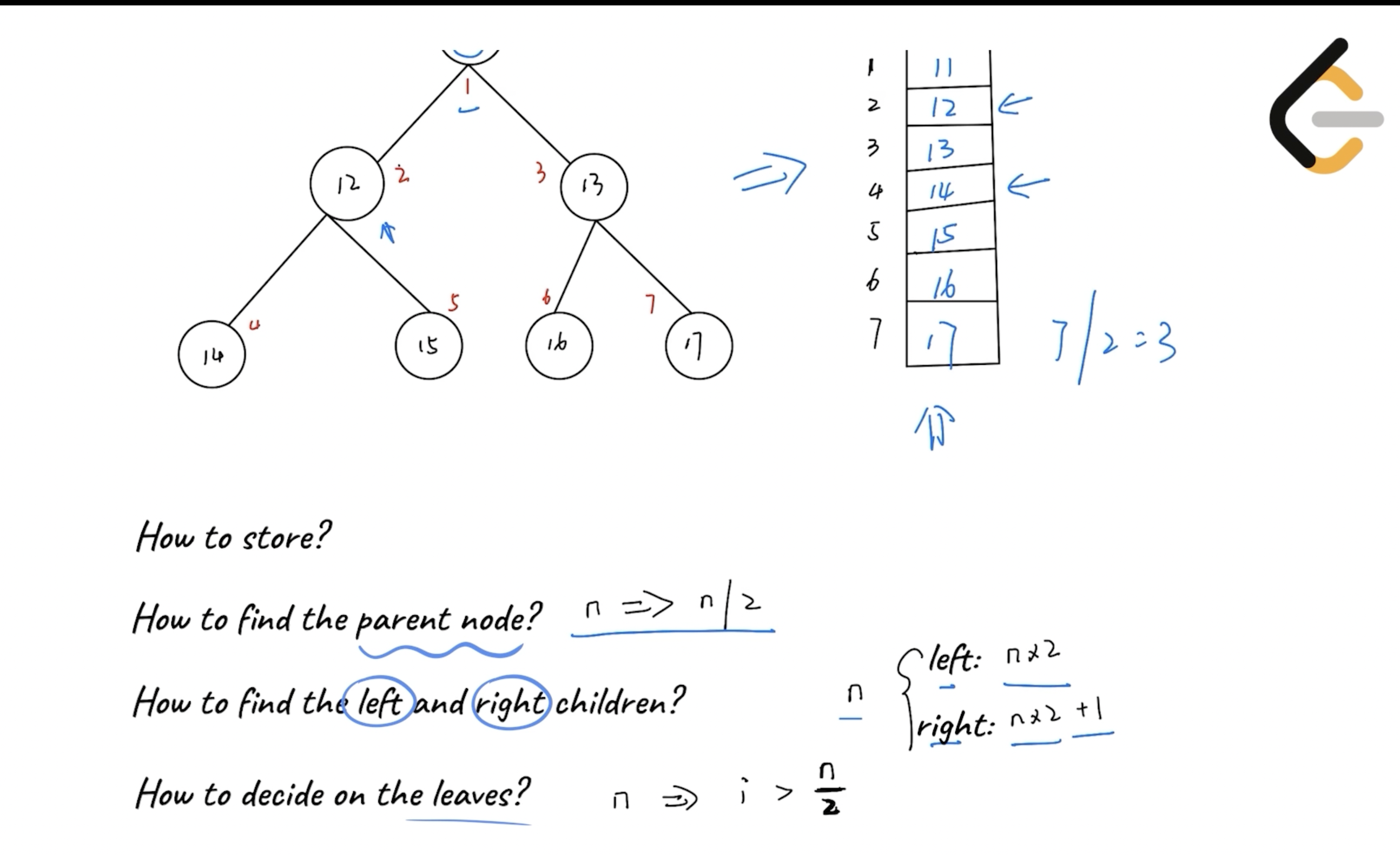
- 怎麼存?
- 那麼,任何節點的
範例:
假設你有一棵像這樣的完全二元樹:
        10
       /  \
     15    20
    / \    /
   30 40  50
這棵樹用**陣列(1 起始)**表示會是:
# `n is an "index"` in array

Index:   1   2   3   4   5   6
Value: [10, 15, 20, 30, 40, 50]
關係:
-
索引 2 的節點(15)
- 父節點:2 / 2 = 1 → 10
- 左子節點:2 * 2 = 4 → 30
- 右子節點:2 * 2 + 1 = 5 → 40
-
陣列轉完全樹
- dev
-
完全二元樹(Complete binary tree)- 完全二元樹是一種二元樹:
除了最後一層之外每一層都被填滿,而且最後一層的節點全部盡量靠左。 - wiki
- 例子:
- 是完全二元樹
- 不是完全二元樹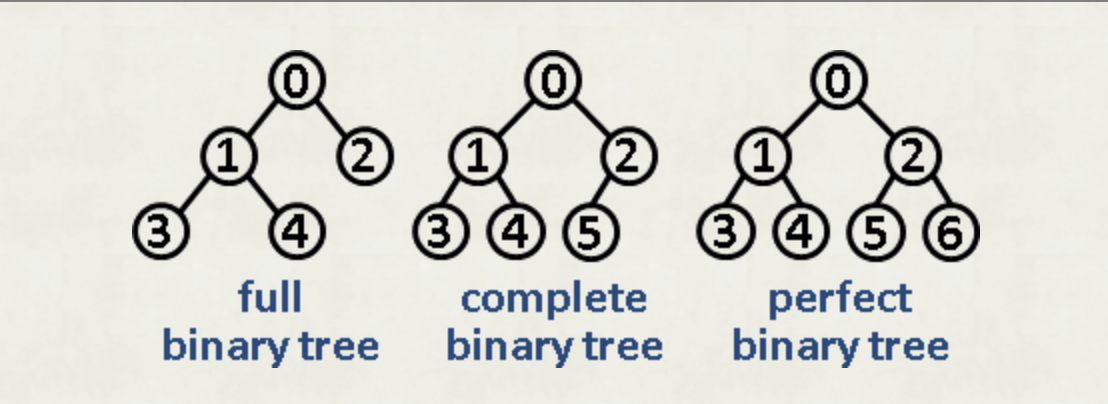
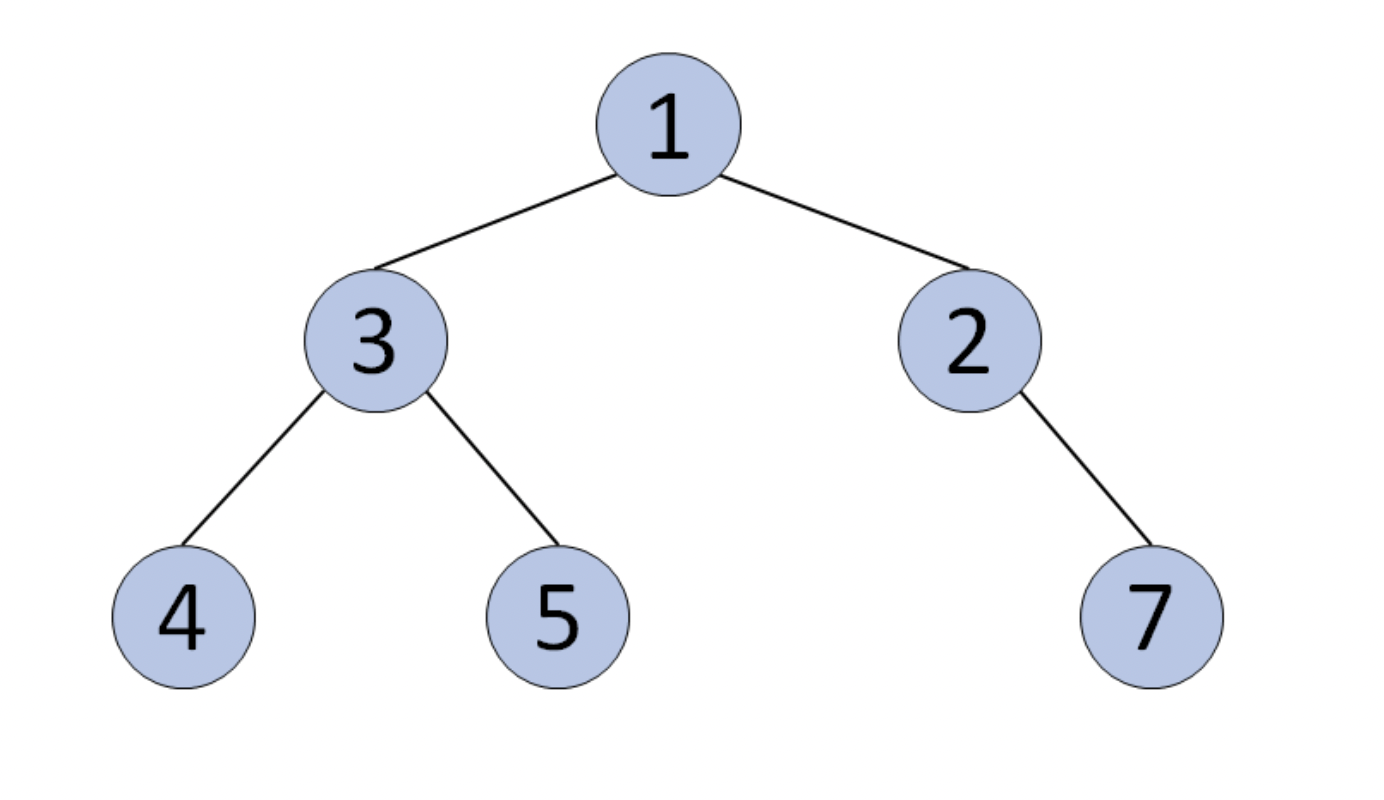
- 完全二元樹是一種二元樹:
模板與演算法
模板比較表
| 模板類型 | 適用情境 | 做法 | 時間 | 空間 | 什麼時候用 |
|---|---|---|---|---|---|
| 遞迴走訪 | 單純走訪 | 遞迴 | O(n) | O(h) | 預設選擇,程式碼乾淨 |
| 迭代走訪 | 記憶體吃緊 | 堆疊/佇列 | O(n) | O(h) | 避開遞迴的額外開銷 |
| Morris 走訪 | 空間吃緊 | 執行緒化(threading) | O(n) | O(1) | 要求常數空間時 |
| 層序 | BFS 題目 | 佇列 | O(n) | O(w) | 一層一層處理 |
| 在樹上二分搜尋 | 完全/平衡樹 | 二分搜尋 | O(log²n) | O(log n) | 利用樹結構做最佳化 |
通用樹模板
def tree_problem(root):
    """
    Universal template for most binary tree problems
    Can be adapted for traversal, calculation, or modification
    """
    # Base case
    if not root:
        return None  # or 0, [], depending on problem

    # Pre-order processing (before recursion)
    # process_current_node()

    # Recursive calls
    left_result = tree_problem(root.left)
    right_result = tree_problem(root.right)

    # Post-order processing (after recursion)
    # combine_results()

    return result
模板 1:樹走訪(遞迴)
# Preorder Traversal
def preorder(root):
    if not root:
        return []
    return [root.val] + preorder(root.left) + preorder(root.right)

# Inorder Traversal
def inorder(root):
    if not root:
        return []
    return inorder(root.left) + [root.val] + inorder(root.right)

# Postorder Traversal
def postorder(root):
    if not root:
        return []
    return postorder(root.left) + postorder(root.right) + [root.val]
模板 2:樹走訪(迭代)
# Iterative Inorder with Stack
def inorder_iterative(root):
    result, stack = [], []
    current = root

    while current or stack:
        # Go to leftmost node
        while current:
            stack.append(current)
            current = current.left

        # Current must be None, so pop from stack
        current = stack.pop()
        result.append(current.val)

        # Visit right subtree
        current = current.right

    return result

# Level Order with Queue
def level_order(root):
    if not root:
        return []

    result = []
    queue = collections.deque([root])

    while queue:
        level_size = len(queue)
        current_level = []

        for _ in range(level_size):
            node = queue.popleft()
            current_level.append(node.val)

            if node.left:
                queue.append(node.left)
            if node.right:
                queue.append(node.right)

        result.append(current_level)

    return result
模板 3:樹的建構
def build_tree_from_traversals(preorder, inorder):
    """
    Construct tree from preorder and inorder traversals
    Key insight: First element in preorder is always root
    """
    if not preorder or not inorder:
        return None

    # Root is first element in preorder
    root = TreeNode(preorder[0])

    # Find root position in inorder to split left/right
    root_idx = inorder.index(root.val)

    # Recursively build subtrees
    # Left subtree: elements before root in inorder
    root.left = build_tree_from_traversals(
        preorder[1:root_idx+1],  # Skip root, take left elements
        inorder[:root_idx]       # Everything before root
    )

    # Right subtree: elements after root in inorder
    root.right = build_tree_from_traversals(
        preorder[root_idx+1:],   # Everything after left subtree
        inorder[root_idx+1:]     # Everything after root
    )

    return root
模板 4:路徑問題
def path_sum_template(root, target):
    """
    Template for path sum problems
    Can track paths, sums, or other properties
    """
    def dfs(node, current_sum, path):
        if not node:
            return

        # Update current state
        current_sum += node.val
        path.append(node.val)

        # Check if leaf node and condition met
        if not node.left and not node.right:
            if current_sum == target:
                result.append(path[:])  # Copy current path

        # Explore subtrees
        dfs(node.left, current_sum, path)
        dfs(node.right, current_sum, path)

        # Backtrack
        """
        NOTE !!! why do we need backtrack here ? (gemini)
        In simple terms, **backtracking** is the "undo" button for your recursion.


        ### 3. A Visual Example

        Imagine this tree:

        ```text
            1
           / \
           2   3

        ```text

        **Without `path.pop()`:**

        1. Go to `1`: `path = [1]`
        2. Go to `2`: `path = [1, 2]`
        3. Finish `2`, go back to `1`.
        4. Go to `3`: `path = [1, 2, 3]`  <-- **ERROR!** (2 shouldn't be here)

        **With `path.pop()`:**

        1. Go to `1`: `path = [1]`
        2. Go to `2`: `path = [1, 2]`
        3. Finish `2`, **`pop()`**: `path = [1]`
        4. Go to `3`: `path = [1, 3]` <-- **CORRECT!**
        """
        path.pop()

    result = []
    dfs(root, 0, [])
    return result
模板 5:樹的性質
def tree_property_template(root):
    """
    Calculate tree properties (height, diameter, balance)
    """
    def helper(node):
        if not node:
            return 0  # or (0, True) for multiple values

        # Get info from subtrees
        left_info = helper(node.left)
        right_info = helper(node.right)

        # Calculate current node's property
        current_property = calculate(left_info, right_info)

        # Update global result if needed
        self.result = max(self.result, current_property)

        return current_property

    self.result = 0
    helper(root)
    return self.result
模板 6:LCA(最近共同祖先)
def find_lca(root, p, q):
    """
    Find lowest common ancestor of nodes p and q
    """
    if not root or root == p or root == q:
        return root

    left = find_lca(root.left, p, q)
    right = find_lca(root.right, p, q)

    # Both found in different subtrees -> current is LCA
    if left and right:
        return root

    # One or both found in same subtree
    return left if left else right
變形 — 上面這個模板假設了兩件事:有一個 root 可以開始搜,以及兩個目標都存在。每個變形打破其中一個,而那就決定了解法的形狀:
| LC | 差在哪 | 形狀 | 複雜度 |
|---|---|---|---|
| 236 | — (基準題) | 就是這個模板 | O(N) / O(H) |
| 235 | 樹是 BST | 只要兩個目標在同一側就往下走;第一個分岔點就是 LCA | O(H) / O(1) |
| 1644 | p、q 可能不存在 |
一樣的後序,但絕不提早 return — 數看到幾個目標,只有 count == 2 才算答案 |
O(N) / O(H) |
| 1650 | 沒有 root,每個節點有 parent |
往上走兩條父鏈 → 就是 LC 160,兩條鏈結串列的交點 | O(H) / O(1) |
| 1676 | 目標有 N 個而不是 2 個 | 一樣的後序,只是比對一個目標 set |
O(N) / O(H) |
- LC 1650(父指標) — 變化點:函式簽名是
lowestCommonAncestor(p, q),沒有root,所以根本沒有一棵樹能遞迴下去。但p.parent.parent…是一條以 root 結尾的鏈結串列,兩個節點就給出兩條在 LCA 合流的串列。往上走,碰到null就換尾巴:
# python
# LC 1650 - Lowest Common Ancestor of a Binary Tree III
# IDEA: 2 pointers on the parent chain; on hitting null, restart at the OTHER node
#       -> each pointer walks len(path(p)) + len(path(q)) steps, so they meet at the LCA
# time = O(h), space = O(1)
class Solution(object):
    def lowestCommonAncestor(self, p, q):
        # edge
        if not p or not q:
            return None

        a, b = p, q
        while a != b:
            # NOTE !!! `if a else q`, NOT `a.parent or q` -- the None step itself
            #          must be consumed, or the two walks differ by one and never meet
            a = a.parent if a else q
            b = b.parent if b else p
        return a
要先講的 O(h) 空間解更單純:把
p的所有祖先丟進一個 set,再從q往上走,回傳第一個命中的 — 往上走的第一個命中就是最低的那個。要 hash 節點,不是node.val。
完整的變形詳解(1650 一步步追蹤,加上 1644 / 1676 / 235 的程式碼)在 tree_lca_distance.md。
模板 7:在樹上做二分搜尋
def count_complete_tree_nodes(root):
    """
    Count nodes in complete binary tree in O(log²n) time
    Key: Use binary search on tree structure
    """
    if not root:
        return 0

    def get_height(node):
        """Get height by going left"""
        height = 0
        while node:
            height += 1
            node = node.left
        return height

    left_height = get_height(root.left)
    right_height = get_height(root.right)

    if left_height == right_height:
        # Left subtree is perfect binary tree
        # Nodes in left = 2^left_height - 1
        # Plus root = 2^left_height
        return (1 << left_height) + count_complete_tree_nodes(root.right)
    else:
        # Right subtree is perfect binary tree
        # Height = right_height, nodes = 2^right_height - 1
        # Plus root = 2^right_height
        return (1 << right_height) + count_complete_tree_nodes(root.left)
模板 8:O(1) 空間串接同層節點(next 指標)優先度 5/5 — 必備 — 幾乎每一輪面試都會出現
模式:你已經站在一層完全串好的節點上了,所以可以用
next走這一層,不需要佇列 — 而在走的同時,用一個虛擬頭節點 + 移動的尾指標把下面那一層縫起來。 關鍵想法:第k層的next鏈就是第k層的佇列。這樣就省掉了 O(w) 的佇列,達到額外 O(1) 空間。 用在樹不是完美樹(有缺子節點)的時候,這也正是天真的root.left.next = root.right招數會失敗的原因。
// java
// LC 117 - Populating Next Right Pointers in Each Node II
// IDEA: traverse level k via its own `next` chain; build level k+1's chain
//       using a dummy node + tail pointer. No queue needed.
/**
 * time = O(N), space = O(1)   // output pointers not counted
 */
public Node connect(Node root) {
    Node cur = root;                 // head of the level being traversed
    while (cur != null) {
        Node dummy = new Node(0);    // sentinel: dummy.next = head of NEXT level
        Node tail = dummy;           // grows the next level's chain

        while (cur != null) {        // walk current level via `next`
            if (cur.left != null) {
                tail.next = cur.left;
                tail = tail.next;
            }
            if (cur.right != null) {
                tail.next = cur.right;
                tail = tail.next;
            }
            cur = cur.next;
        }
        cur = dummy.next;            // drop down one level
    }
    return root;
}
# python
# LC 117 - Populating Next Right Pointers in Each Node II
# IDEA: same as java - dummy head + tail builds the next level's `next` chain
class Solution:
    def connect(self, root):
        # time = O(N), space = O(1)
        cur = root
        while cur:
            dummy = Node(0)      # sentinel for the NEXT level
            tail = dummy
            while cur:           # walk current level through `next`
                if cur.left:
                    tail.next = cur.left
                    tail = tail.next
                if cur.right:
                    tail.next = cur.right
                    tail = tail.next
                cur = cur.next
            cur = dummy.next     # move down
        return root
變形
- LC 116(完美樹) — 轉折:每個節點不是 0 個就是 2 個子節點,所以虛擬頭/尾的那套記帳可以塌縮成
cur.left.next = cur.right; cur.right.next = cur.next.left。上面模板 8 的程式碼原封不動也能解 116 — 背 117,116 免費附送。
模板 9:樹 DP — 由下而上回傳多個狀態 優先度 5/5 — 必備 — 幾乎每一輪面試都會出現
模式:模板 5 每棵子樹回傳一個數字。當父節點的選擇取決於子節點選了什麼做法時,改成回傳一個狀態組。 遞迴式(LC 337):
take(n) = n.val + skip(L) + skip(R),skip(n) = max(take(L), skip(L)) + max(take(R), skip(R))。 辨認關鍵字:「不能選相鄰的兩個節點」、「覆蓋每一個節點」、「每個節點有 k 種模式」— 任何把父子決策綁在一起的限制。
// java
// LC 337 - House Robber III
// IDEA: post-order DP. Each call returns {maxIfWeRobThisNode, maxIfWeSkipThisNode}.
//       Robbing a node forbids robbing its children -> must use children's "skip".
/**
 * time = O(N), space = O(H)   // H = tree height (recursion stack)
 */
public int rob(TreeNode root) {
    int[] res = robHelper(root);
    return Math.max(res[0], res[1]);
}

// returns int[]{ take, skip }
private int[] robHelper(TreeNode node) {
    if (node == null) {
        return new int[]{0, 0};
    }
    int[] l = robHelper(node.left);
    int[] r = robHelper(node.right);

    // rob current -> children MUST be skipped
    int take = node.val + l[1] + r[1];
    // skip current -> children are free to do whatever is best
    int skip = Math.max(l[0], l[1]) + Math.max(r[0], r[1]);

    return new int[]{take, skip};
}
# python
# LC 337 - House Robber III
# IDEA: post-order DP returning (take, skip) per subtree
class Solution:
    def rob(self, root):
        # time = O(N), space = O(H)
        def helper(node):
            if not node:
                return (0, 0)             # (take, skip)
            l = helper(node.left)
            r = helper(node.right)
            take = node.val + l[1] + r[1]  # children must be skipped
            skip = max(l) + max(r)         # children free to choose
            return (take, skip)

        return max(helper(root))
變形 — 一樣是後序的「回傳我這棵子樹的資訊」骨架,只是承載的東西不同:
| LC | 題目 | 每次呼叫回傳什麼 |
|---|---|---|
| 337 | House Robber III | (take, skip) — 上面那個模板 |
| 968 | Binary Tree Cameras | 節點狀態:needsCover / hasCamera / covered(在三個狀態上做貪婪) |
| 508 | Most Frequent Subtree Sum | 子樹和,往上的路上記進一個 HashMap |
| 652 | Find Duplicate Subtrees | 一個正規化字串 val,left,right,記進一個 HashMap;計數剛好到 2 時把節點加入答案 |
| 563 | Binary Tree Tilt | 子樹和,同時把 abs(leftSum - rightSum) 累加到全域變數 |
| 687 | Longest Univalue Path | 往下同值的最長單邊;全域最大值 = 左邊 + 右邊 |
| 549 | Binary Tree Longest Consecutive Sequence II | (inc, dec) — 從我這裡往下的最長遞增/遞減連續串;全域最大值 = inc + dec - 1(下面有完整寫法) |
// java
// LC 652 - Find Duplicate Subtrees
// IDEA: serialize every subtree into a canonical id string, count ids in a map.
//       Two subtrees are identical iff their ids are equal.
//       NOTE: use a null marker ("#") - without it "1,2" is ambiguous.
/**
 * time = O(N^2) worst case (string building), space = O(N^2)
 */
public List<TreeNode> findDuplicateSubtrees(TreeNode root) {
    Map<String, Integer> cnt = new HashMap<>();
    List<TreeNode> res = new ArrayList<>();
    subtreeId(root, cnt, res);
    return res;
}

private String subtreeId(TreeNode node, Map<String, Integer> cnt, List<TreeNode> res) {
    if (node == null) {
        return "#";
    }
    String key = node.val + ","
            + subtreeId(node.left, cnt, res) + ","
            + subtreeId(node.right, cnt, res);

    int c = cnt.merge(key, 1, Integer::sum);
    if (c == 2) {   // == 2 (not >= 2) so each duplicate is reported once
        res.add(node);
    }
    return key;
}
# python
# LC 652 - Find Duplicate Subtrees
# IDEA: canonical subtree id string + Counter
class Solution:
    def findDuplicateSubtrees(self, root):
        # time = O(N^2) worst case, space = O(N^2)
        cnt = collections.Counter()
        res = []

        def sid(node):
            if not node:
                return "#"                 # null marker keeps ids unambiguous
            key = "%s,%s,%s" % (node.val, sid(node.left), sid(node.right))
            cnt[key] += 1
            if cnt[key] == 2:              # report each duplicate exactly once
                res.append(node)
            return key

        sid(root)
        return res
實作變形:一個節點兩條連續串 — LC 549 Binary Tree Longest Consecutive Sequence II 優先度 4/5 — 高價值 — 這裡有缺口就會掉關
LC 298(§2-4)的續集,改了兩件事:連續串可以遞增也可以遞減,而且可以在節點處轉彎 (
子 → 父 → 子),不再只能一路往下。 出處:binary-tree-longest-consecutive-sequence-ii.py
為什麼要回傳一組值,而不是一個數字 — 從值為 v 的節點看出去,值是 v + 1 的子節點只能延長遞增串,
值是 v - 1 的子節點只能延長遞減串。父節點兩件事都要問,所以每次呼叫回傳 (inc, dec):
從這個節點出發、一路往下的最長遞增/遞減連續串。
// java
// LC 549 - Binary Tree Longest Consecutive Sequence II
// IDEA: post-order DP. Each call returns {inc, dec} = longest ascending / descending
//       consecutive run STARTING at this node and going straight down.
//       The bent (child -> node -> child) path is scored into a global, not returned.
/**
 * time = O(N), space = O(H)   // H = tree height (recursion stack)
 */
private int res = 0;

public int longestConsecutive(TreeNode root) {
    helper(root);
    return res;
}

// returns int[]{ inc, dec }
private int[] helper(TreeNode node) {
    if (node == null) {
        return new int[]{0, 0};
    }
    int[] l = helper(node.left);
    int[] r = helper(node.right);

    int inc = 1, dec = 1;   // the node alone is already a run of length 1
    /** NOTE !!! null-check the child BEFORE reading child.val */
    if (node.left != null) {
        if (node.left.val == node.val + 1) {
            inc = Math.max(inc, l[0] + 1);
        } else if (node.left.val == node.val - 1) {
            dec = Math.max(dec, l[1] + 1);
        }
    }
    if (node.right != null) {
        if (node.right.val == node.val + 1) {
            inc = Math.max(inc, r[0] + 1);
        } else if (node.right.val == node.val - 1) {
            dec = Math.max(dec, r[1] + 1);
        }
    }

    // the path is allowed to BEND here: descending arm + this node + ascending arm
    res = Math.max(res, inc + dec - 1);

    // only the STRAIGHT runs are usable by the parent
    return new int[]{inc, dec};
}
# python
# LC 549 - Binary Tree Longest Consecutive Sequence II
# IDEA: post-order DP returning (inc, dec) per subtree; bent path scored into a global
class Solution:
    def longestConsecutive(self, root):
        # time = O(N), space = O(H)
        self.res = 0

        def helper(node):
            if not node:
                return (0, 0)                   # (inc, dec)

            l_inc, l_dec = helper(node.left)
            r_inc, r_dec = helper(node.right)

            inc = dec = 1                       # the node alone is a run of length 1
            if node.left:
                if node.left.val == node.val + 1:
                    inc = max(inc, l_inc + 1)
                elif node.left.val == node.val - 1:
                    dec = max(dec, l_dec + 1)
            if node.right:
                if node.right.val == node.val + 1:
                    inc = max(inc, r_inc + 1)
                elif node.right.val == node.val - 1:
                    dec = max(dec, r_dec + 1)

            # bend at THIS node: descending arm + node + ascending arm
            self.res = max(self.res, inc + dec - 1)
            return (inc, dec)                   # straight runs only go up

        helper(root)
        return self.res
轉彎的過程
      2         helper(1) -> (inc=1, dec=1)      leaf
     / \        helper(3) -> (inc=1, dec=1)      leaf
    1   3       at node 2:  left.val 1 == 2 - 1  -> dec = l_dec + 1 = 2
                            right.val 3 == 2 + 1 -> inc = r_inc + 1 = 2
                answer here = inc + dec - 1 = 2 + 2 - 1 = 3     (1 -> 2 -> 3)
                returns (2, 2) upward — NOT 3, a bent path cannot be extended
三個讓它正確的關鍵
- 1是因為節點被算了兩次 — 它既是遞減那一臂的最後一格,也是遞增那一臂的第一格。 葉節點一樣成立:1 + 1 - 1 = 1。- 兩臂永遠不可能是同一個子節點 —
inc只會從值為val + 1的子節點長出來,dec只會從val - 1長出來,一個子節點不可能兩者皆是。所以inc + dec - 1一定是一條真實存在的路徑,不會把同一條分支 重複算兩次。(LC 124 / 543 是靠分別寫left、right白拿這個保證;這裡則來自值的判斷。) - 全域記答案,往上只回傳單邊 — 轉彎後的長度寫進
res;往上只給(inc, dec)。 和 LC 124(最大路徑和)、LC 543(直徑)、LC 687(同值路徑)是同一種拆法。
LC 298 vs LC 549
| LC 298 | LC 549 | |
|---|---|---|
| 方向 | 嚴格遞增,父 → 子 | 遞增或遞減 |
| 形狀 | 只能一路往下 | 可以轉彎:子 → 節點 → 子 |
| 狀態 | 一個純量 cur_len 往下帶(§0-2 的 A/B 型) |
一組 (inc, dec) 往上回傳(C 型/本模板) |
| 答案 | cur_len 的全域最大值 |
inc + dec - 1 的全域最大值 |
| 中斷規則 | 連續中斷 → cur_len = 1 |
連續中斷 → 那一臂就停在 1 |
陷阱:把
res初始化成0是安全的(空樹必須回傳0,而任何真實節點至少算得到1 + 1 - 1 = 1), 但把兩臂的初始值設成0就不安全 — 葉節點會回報-1。
模板 10:後序的結構性修改(回傳新的子樹)優先度 4/5 — 高價值 — 這裡有缺口就會掉關
模式:遞迴回傳一個節點(可能是
null),父節點再把它重新指派回去:node.left = helper(node.left)。就靠這一行,你可以刪掉/剪掉節點,完全不用碰父指標。 關鍵想法:先修好子節點(後序),再決定當前節點的命運。父節點被刪掉的節點會變成新的森林根,所以要把這件事往下傳。 辨認關鍵字:「刪除節點並回傳……」、「剪枝」、「移除滿足……的子樹」。
// java
// LC 1110 - Delete Nodes And Return Forest
// IDEA: DFS carrying `isRoot` (= my parent was deleted / I am the original root).
//       A surviving node that is a root gets collected. A deleted node returns null,
//       which detaches it from its parent, and marks its children as new roots.
/**
 * time = O(N), space = O(N)
 */
public List<TreeNode> delNodes(TreeNode root, int[] to_delete) {
    Set<Integer> toDel = new HashSet<>();
    for (int v : to_delete) {
        toDel.add(v);
    }
    List<TreeNode> forest = new ArrayList<>();
    walk(root, true, toDel, forest);
    return forest;
}

private TreeNode walk(TreeNode node, boolean isRoot, Set<Integer> toDel, List<TreeNode> forest) {
    if (node == null) {
        return null;
    }
    boolean deleted = toDel.contains(node.val);

    // I survive AND nobody points at me -> I head a tree in the forest
    if (isRoot && !deleted) {
        forest.add(node);
    }

    // children are "roots" exactly when I am deleted
    node.left = walk(node.left, deleted, toDel, forest);
    node.right = walk(node.right, deleted, toDel, forest);

    return deleted ? null : node;   // returning null detaches me from my parent
}
# python
# LC 1110 - Delete Nodes And Return Forest
# IDEA: same - return None to detach, pass `is_root` down
class Solution:
    def delNodes(self, root, to_delete):
        # time = O(N), space = O(N)
        to_del = set(to_delete)
        forest = []

        def walk(node, is_root):
            if not node:
                return None
            deleted = node.val in to_del
            if is_root and not deleted:
                forest.append(node)
            # my children become roots iff I am deleted
            node.left = walk(node.left, deleted)
            node.right = walk(node.right, deleted)
            return None if deleted else node

        walk(root, True)
        return forest
變形
- LC 814(Binary Tree Pruning) — 轉折:沒有森林,只有一棵樹,而且刪除的判斷取決於已經剪過的子節點,所以檢查必須放在兩次遞迴呼叫之後。
// java
// LC 814 - Binary Tree Pruning
// IDEA: prune children first, THEN test if I became a valueless leaf
/**
 * time = O(N), space = O(H)
 */
public TreeNode pruneTree(TreeNode root) {
    if (root == null) {
        return null;
    }
    root.left = pruneTree(root.left);
    root.right = pruneTree(root.right);

    // only decidable after children are pruned
    if (root.val == 0 && root.left == null && root.right == null) {
        return null;
    }
    return root;
}
# python
# LC 814 - Binary Tree Pruning
class Solution:
    def pruneTree(self, root):
        # time = O(N), space = O(H)
        if not root:
            return None
        root.left = self.pruneTree(root.left)
        root.right = self.pruneTree(root.right)
        if root.val == 0 and not root.left and not root.right:
            return None
        return root
模板 11:帶位置索引的 BFS(在一般樹上做堆積式索引)優先度 4/5 — 高價值 — 這裡有缺口就會掉關
模式:在 BFS 佇列裡讓每個節點帶著一個虛擬陣列索引 —
left = 2*i、right = 2*i + 1— 也就是把任何二元樹都當成嵌在上面講的完全樹陣列佈局裡。 關鍵想法:索引編碼的是含空隙在內的水平位置,這是單純數每層節點數辦不到的。某一層的寬度 =lastIndex - firstIndex + 1。 容易踩到的坑:索引每層翻倍,在一棵 3000 層深的歪斜樹上會溢位 — 每一輪都減掉該層第一個索引來正規化。
// java
// LC 662 - Maximum Width of Binary Tree
// IDEA: BFS carrying the heap-style index of each node. Width of a level is
//       (index of last node) - (index of first node) + 1, so null gaps count.
/**
 * time = O(N), space = O(W)   // W = max level width
 */
public int widthOfBinaryTree(TreeNode root) {
    if (root == null) {
        return 0;
    }
    int res = 0;
    Queue<TreeNode> nodes = new LinkedList<>();
    Queue<Integer> idx = new LinkedList<>();
    nodes.add(root);
    idx.add(0);

    while (!nodes.isEmpty()) {
        int size = nodes.size();
        int first = 0, last = 0;

        for (int i = 0; i < size; i++) {
            TreeNode n = nodes.poll();
            int j = idx.poll();

            if (i == 0) {
                first = j;          // anchor of this level
            }
            j -= first;             // NOTE: re-base to 0 -> prevents overflow
            last = j;

            if (n.left != null) {
                nodes.add(n.left);
                idx.add(2 * j);
            }
            if (n.right != null) {
                nodes.add(n.right);
                idx.add(2 * j + 1);
            }
        }
        res = Math.max(res, last + 1);   // last - 0 + 1
    }
    return res;
}
# python
# LC 662 - Maximum Width of Binary Tree
# IDEA: BFS with (node, heap_index); width = last_idx - first_idx + 1
class Solution:
    def widthOfBinaryTree(self, root):
        # time = O(N), space = O(W)
        if not root:
            return 0
        res = 0
        q = collections.deque([(root, 0)])

        while q:
            size = len(q)
            first = last = 0
            for i in range(size):
                node, j = q.popleft()
                if i == 0:
                    first = j          # anchor of this level
                j -= first             # re-base to 0 (keeps ints small)
                last = j
                if node.left:
                    q.append((node.left, 2 * j))
                if node.right:
                    q.append((node.right, 2 * j + 1))
            res = max(res, last + 1)
        return res
變形
- LC 958(Check Completeness of a Binary Tree) — 轉折:同樣是「空隙很重要」的想法,但更簡單的做法是把
null子節點也推進佇列,然後主張一旦 pop 出一個null,後面就不能再出現非 null。
// java
// LC 958 - Check Completeness of a Binary Tree
// IDEA: BFS enqueuing nulls too. In a complete tree all real nodes come first.
/**
 * time = O(N), space = O(W)
 */
public boolean isCompleteTree(TreeNode root) {
    Queue<TreeNode> q = new LinkedList<>();
    q.add(root);
    boolean seenNull = false;

    while (!q.isEmpty()) {
        TreeNode n = q.poll();
        if (n == null) {
            seenNull = true;          // a hole appeared
        } else {
            if (seenNull) {
                return false;         // real node AFTER a hole -> not complete
            }
            q.add(n.left);            // push nulls on purpose
            q.add(n.right);
        }
    }
    return true;
}
# python
# LC 958 - Check Completeness of a Binary Tree
class Solution:
    def isCompleteTree(self, root):
        # time = O(N), space = O(W)
        q = collections.deque([root])
        seen_null = False
        while q:
            node = q.popleft()
            if not node:
                seen_null = True
            else:
                if seen_null:
                    return False      # non-null after a null -> not complete
                q.append(node.left)   # push nulls on purpose
                q.append(node.right)
        return True
依模式分類的題目
依模式的題目分類
模式 1:樹走訪題目
| 題目 | LC # | 難度 | 關鍵技巧 | 模板 |
|---|---|---|---|---|
| Binary Tree Inorder Traversal | 94 | Easy | 堆疊/遞迴 | 模板 1/2 |
| Binary Tree Preorder Traversal | 144 | Easy | 堆疊/遞迴 | 模板 1/2 |
| Binary Tree Postorder Traversal | 145 | Easy | 堆疊/遞迴 | 模板 1/2 |
| Binary Tree Level Order Traversal | 102 | Medium | 佇列 BFS | 模板 2 |
| Binary Tree Zigzag Level Order | 103 | Medium | BFS + 方向 | 模板 2 |
| Binary Tree Right Side View | 199 | Medium | 層序/DFS | 模板 2 |
| Binary Tree Vertical Order | 314 | Medium | BFS + 雜湊表 | 模板 2 |
| Find Bottom Left Tree Value | 513 | Medium | 層序 | 模板 2 |
模式 1b:層序的各種變形(BFS 骨架完全相同,只有每層的彙整方式不同)
這些全都是模板 2 那個
while queue: for _ in range(level_size)迴圈,只改一行。骨架學一次就好。
| 題目 | LC # | 難度 | 改動的那一行 |
|---|---|---|---|
| Level Order Traversal II | 107 | Medium | 最後把結果串列反轉(或用 insert(0, level)) |
| Average of Levels | 637 | Easy | res.append(sum(level) / len(level)) |
| Find Largest Value in Each Row | 515 | Medium | res.append(max(level))(取該層最大值) |
| Maximum Level Sum | 1161 | Medium | 追蹤 sum(level),並回傳最大者從 1 起算的層號 |
| Cousins in Binary Tree | 993 | Easy | 同深度(同一層)但父節點不同 → 入佇列時順便記住父節點 |
| Maximum Width of Binary Tree | 662 | Medium | 每個節點帶著堆積索引 → 模板 11 |
| Check Completeness | 958 | Medium | null 子節點也入佇列 → 模板 11 的變形 |
| Vertical Order Traversal | 987 | Hard | 像 LC 314 那樣依欄做 BFS,但同位置時要用 (row, value) 決勝負 → 每欄必須排序 |
模式 2:樹建構題目
| 題目 | LC # | 難度 | 關鍵技巧 | 模板 |
|---|---|---|---|---|
| Construct from Preorder & Inorder | 105 | Medium | 索引對照表 | 模板 3 |
| Construct from Inorder & Postorder | 106 | Medium | 索引對照表 | 模板 3 |
| Construct from Preorder & Postorder | 889 | Medium | 遞迴 | 模板 3 |
| Convert Sorted Array to BST | 108 | Easy | 二分搜尋 | 模板 3 |
| Serialize and Deserialize Tree | 297 | Hard | BFS/DFS | 模板 3 |
| Construct from String | 536 | Medium | 堆疊/遞迴 | 模板 3 |
模式 3:路徑題目
| 題目 | LC # | 難度 | 關鍵技巧 | 模板 |
|---|---|---|---|---|
| Path Sum | 112 | Easy | DFS | 模板 4 |
| Path Sum II | 113 | Medium | DFS + 回溯 | 模板 4 |
| Binary Tree Paths | 257 | Easy | DFS + 記錄路徑 | 模板 4 |
| Sum Root to Leaf Numbers | 129 | Medium | DFS | 模板 4 |
| Binary Tree Maximum Path Sum | 124 | Hard | DFS + 全域最大值 | 模板 4 |
| Longest Consecutive Sequence | 298 | Medium | DFS + 計數器 | 模板 4(見 §0-2:由上而下和由下而上都能解) |
| Longest Consecutive Sequence II | 549 | Medium | DFS + 狀態組 | 模板 9(路徑可轉彎,inc + dec - 1) |
| Path Sum III | 437 | Medium | 前綴和 | 模板 4 + 樹上前綴和模板 |
模式 4:樹性質題目
| 題目 | LC # | 難度 | 關鍵技巧 | 模板 |
|---|---|---|---|---|
| Maximum Depth | 104 | Easy | DFS/BFS | 模板 5 |
| Minimum Depth | 111 | Easy | DFS/BFS | 模板 5 |
| Balanced Binary Tree | 110 | Easy | 檢查高度 | 模板 5 |
| Diameter of Binary Tree | 543 | Easy | DFS + 取最大 | 模板 5 |
| Symmetric Tree | 101 | Easy | 鏡像檢查 | 模板 5 |
| Same Tree | 100 | Easy | 兩棵樹同步 DFS | 模板 5 |
模式 4b:性質/雙樹 DFS 骨架的各種轉折
| 題目 | LC # | 難度 | 轉折在哪 |
|---|---|---|---|
| Flip Equivalent Binary Trees | 951 | Medium | LC 100 的雙樹 DFS,但兩種配對都接受:(L,L)&(R,R) 或 (L,R)&(R,L) |
| Merge Two Binary Trees | 617 | Easy | 雙樹 DFS,但缺一個節點不算不符 — 直接回傳另一邊 |
| Max Difference Between Node and Ancestor | 1026 | Medium | 改成由上而下而非由下而上:把 (minSoFar, maxSoFar) 往下推;每片葉子上的答案是 max - min |
| Most Frequent Subtree Sum | 508 | Medium | 由下而上的子樹和 + 頻率表 → 模板 9 |
| Binary Tree Tilt / Longest Univalue Path | 563 / 687 | Easy / Medium | 往上回傳一個值,同時把另一個值累加進全域變數 → 模板 9 |
模式 5:LCA 與距離題目
| 題目 | LC # | 難度 | 關鍵技巧 | 模板 |
|---|---|---|---|---|
| Lowest Common Ancestor | 236 | Medium | DFS | 模板 6 |
| LCA of BST | 235 | Easy | BST 性質 | 模板 6 |
| LCA II(目標可能不存在) | 1644 | Medium | DFS + 數找到幾個 | 模板 6 的變形 |
| LCA III(有父指標、沒有 root) | 1650 | Medium | 往上走兩條父鏈(LC 160) | 模板 6 的變形 |
| LCA IV(N 個目標) | 1676 | Medium | 對著目標 set 做 DFS |
模板 6 的變形 |
| Distance K from Target | 863 | Medium | 轉成圖 | 模板 6 |
| LCA of Deepest Leaves | 1123 | Medium | DFS + 深度 | 模板 6 |
模式 6:在樹上二分搜尋的題目
| 題目 | LC # | 難度 | 關鍵技巧 | 模板 |
|---|---|---|---|---|
| Count Complete Tree Nodes | 222 | Medium | 對高度做二分搜尋 | 模板 7 |
| Kth Smallest in BST | 230 | Medium | 中序 + 二分搜尋 | 模板 7 |
| Closest BST Value | 270 | Easy | 在 BST 上二分搜尋 | 模板 7 |
| Closest BST Value II | 272 | Hard | 中序 + 雙指標 | 模板 7 |
依難度分類的完整題目清單
Easy 題(基礎)
- LC 94: Binary Tree Inorder Traversal - 基本走訪
- LC 100: Same Tree - 樹的比對
- LC 101: Symmetric Tree - 鏡像性質檢查
- LC 104: Maximum Depth - 基本遞迴
- LC 108: Convert Sorted Array to BST - 陣列轉樹
- LC 110: Balanced Binary Tree - 高度計算
- LC 111: Minimum Depth - 用 BFS 找最短路徑
- LC 112: Path Sum - 簡單的路徑追蹤
- LC 144: Binary Tree Preorder Traversal - 堆疊的使用
- LC 145: Binary Tree Postorder Traversal - 堆疊操作
- LC 226: Invert Binary Tree - 樹的修改
- LC 235: LCA of BST - BST 性質
- LC 257: Binary Tree Paths - 蒐集路徑
- LC 543: Diameter of Binary Tree - 全域最大值模式
- LC 572: Subtree of Another Tree - 樹的比對
Medium 題(核心)
- LC 102: Binary Tree Level Order Traversal - BFS 基礎
- LC 103: Binary Tree Zigzag Level Order - 帶方向的層序
- LC 105: Construct from Preorder & Inorder - 索引對照表
- LC 106: Construct from Inorder & Postorder - 陣列切片
- LC 113: Path Sum II - 回溯路徑
- LC 114: Flatten Binary Tree - 原地修改
- LC 116: Populating Next Right Pointers - 串接同層節點
- LC 129: Sum Root to Leaf Numbers - 組出數字
- LC 173: Binary Search Tree Iterator - iterator 設計
- LC 199: Binary Tree Right Side View - 每層最後一個元素
- LC 222: Count Complete Tree Nodes - 在樹上二分搜尋
- LC 230: Kth Smallest in BST - 中序性質
- LC 236: Lowest Common Ancestor - 經典 LCA
- LC 298: Binary Tree Longest Consecutive - 路徑追蹤
- LC 314: Binary Tree Vertical Order - 欄位索引
- LC 437: Path Sum III - 樹上的前綴和(模板)
- LC 513: Find Bottom Left Tree Value - 層序的變形
- LC 536: Construct from String - 解析成樹
- LC 549: Binary Tree Longest Consecutive II - 可轉彎的路徑,(inc, dec) 狀態
- LC 654: Maximum Binary Tree - 單調堆疊
- LC 863: All Nodes Distance K - 轉成圖
Hard 題(進階)
- LC 124: Binary Tree Maximum Path Sum - 全域最佳化
- LC 297: Serialize and Deserialize - 字串轉樹
- LC 834: Sum of Distances in Tree - 換根技巧
- LC 968: Binary Tree Cameras - 樹上的貪婪
2) LC 範例
2-1) Construct Binary Tree from Preorder and Inorder Traversal — LC 105
# python
# LC 105. Construct Binary Tree from Preorder and Inorder Traversal
# V0
# IDEA : BST property
class Solution(object):
    def buildTree(self, preorder, inorder):
        if len(preorder) == 0:
            return None
        if len(preorder) == 1:
            return TreeNode(preorder[0])
        ### NOTE : init root like below (via TreeNode and root value (preorder[0]))
        root = TreeNode(preorder[0])
        """
        NOTE !!!
        -> # we get index of root.val from "INORDER" to SPLIT TREE
        """
        index = inorder.index(root.val)  # the index of root at inorder, and we can also get the length of left-sub-tree, right-sub-tree ( preorder[1:index+1]) for following using
        # recursion for root.left
        #### NOTE : the idx is from "INORDER"
        #### NOTE : WE idx from inorder in preorder as well
        #### NOTE : preorder[1 : index + 1] (for left sub tree)
        root.left = self.buildTree(preorder[1 : index + 1], inorder[ : index]) ### since the BST is symmery so the length of left-sub-tree is same in both Preorder and Inorder, so we can use the index to get the left-sub-tree of Preorder as well
        # recursion for root.right
        root.right = self.buildTree(preorder[index + 1 : ], inorder[index + 1 :]) ### since the BST is symmery so the length of left-sub-tree is same in both Preorder and Inorder, so we can use the index to get the right-sub-tree of Preorder as well
        return root
2-2) Construct Binary Tree from Inorder and Postorder Traversal — LC 106
# python
# LC 106 Construct Binary Tree from Inorder and Postorder Traversal
# V0
# IDEA : Binary Tree property, same as LC 105
class Solution(object):
    def buildTree(self, inorder, postorder):
        if not inorder:
            return None
        if len(inorder) == 1:
            return TreeNode(inorder[0])
        ### NOTE : we get root from postorder
        root = TreeNode(postorder[-1])
        """
        ### NOTE : the index is from inorder
        ### NOTE : we get index of root in inorder
        #    -> and this idx CAN BE USED IN BOTH inorder, postorder (Binary Tree property)
        """
        idx = inorder.index(root.val)
        ### NOTE : inorder[:idx], postorder[:idx]
        root.left = self.buildTree(inorder[:idx], postorder[:idx])
        ### NOTE : postorder[idx:-1]
        root.right =  self.buildTree(inorder[idx+1:], postorder[idx:-1])
        return root
2-3) Binary Tree Paths — LC 257
# LC 257 Binary Tree Paths

# V0
# IDEA : BFS
class Solution:
    def binaryTreePaths(self, root):
        res = []
        ### NOTE : we set q like this : [[root, cur]]
        cur = ""
        q = [[root, cur]]
        while q:
            for i in range(len(q)):
                node, cur = q.pop(0)
                ### NOTE : if node exist, but no sub tree (i.e. not root.left and not root.right)
                #         -> append cur to result
                if node:
                    if not node.left and not node.right:
                        res.append(cur + str(node.val))
                ### NOTE : we keep cur to left sub tree
                if node.left:
                    q.append((node.left, cur + str(node.val) + '->'))
                ### NOTE : we keep cur to left sub tree
                if node.right:
                    q.append((node.right, cur + str(node.val) + '->'))
        return res

# V0'
# IDEA : DFS
class Solution:
    def binaryTreePaths(self, root):
        ans = []
        def dfs(r, tmp):
            if r.left:
                dfs(r.left, tmp + [str(r.left.val)])
            if r.right:
                dfs(r.right, tmp + [str(r.right.val)])
            if not r.left and not r.right:
                ans.append('->'.join(tmp))
        if not root:
            return []
        dfs(root, [str(root.val)])
        return ans
2-4) Binary Tree Longest Consecutive Sequence — LC 298
回看 vs 前看 vs 由下而上的比較見 §0-2 / §0-3 — LC 298 是少見的三種形狀都能解的題目。 續集 LC 549(路徑可以轉彎,也可以遞減)見 模板 9 — LC 549,在那裡純量
cur_len必須變成一組(inc, dec)。
# LC 298 Binary Tree Longest Consecutive Sequence
# V0
# IDEA : DFS
class Solution(object):
    def longestConsecutive(self, root):
        if not root:
            return 0

        self.result = 0
        self.helper(root, 1)

        return self.result

    def helper(self, root, curLen):
        self.result = curLen if curLen > self.result else self.result
        if root.left:
            if root.left.val == root.val + 1:
                self.helper(root.left, curLen + 1)
            else:
                self.helper(root.left, 1)
        if root.right:
            if root.right.val == root.val + 1:
                self.helper(root.right, curLen + 1)
            else:
                self.helper(root.right, 1)

# V0'
# IDEA : BFS
class Solution(object):
    def longestConsecutive(self, root):
        if root is None:
            return 0

        stack = list()
        stack.append((root, 1))
        maxLen = 1
        while len(stack) > 0:
            node, pathLen = stack.pop()
            if node.left is not None:
                if node.val + 1 == node.left.val:
                    stack.append((node.left, pathLen + 1))
                    maxLen = max(maxLen, pathLen + 1)
                else:
                    stack.append((node.left, 1))
            if node.right is not None:
                if node.val + 1 == node.right.val:
                    stack.append((node.right, pathLen + 1))
                    maxLen = max(maxLen, pathLen + 1)
                else:
                    stack.append((node.right, 1))

        return maxLen
2-5) Binary Search Tree Iterator — LC 173
# LC 173. Binary Search Tree Iterator

# V0
# IDEA : STACK + tree
class BSTIterator(object):
    def __init__(self, root):
        """
        :type root: TreeNode
        """
        self.stack = []
        self.inOrder(root)

    def inOrder(self, root):
        if not root:
            return
        self.inOrder(root.right)
        self.stack.append(root.val)
        self.inOrder(root.left)

    def hasNext(self):
        """
        :rtype: bool
        """
        return len(self.stack) > 0

    def next(self):
        """
        :rtype: int
        """
        return self.stack.pop()
2-6) Count Complete Tree Nodes(在樹上二分搜尋)— LC 222
// LC 222. Count Complete Tree Nodes
// Java Implementation

// V0 - BFS Approach
// IDEA: Level-order traversal to count all nodes
/**
 * time = O(N)
 * space = O(N)
 */
public int countNodes_BFS(TreeNode root) {
    if (root == null) {
        return 0;
    }

    List<TreeNode> collected = new ArrayList<>();
    Queue<TreeNode> q = new LinkedList<>();
    q.add(root);

    while (!q.isEmpty()) {
        TreeNode cur = q.poll();
        collected.add(cur);

        if (cur.left != null) {
            q.add(cur.left);
        }
        if (cur.right != null) {
            q.add(cur.right);
        }
    }

    return collected.size();
}

// V1 - DFS Approach
// IDEA: Recursively count nodes in left and right subtrees
/**
 * time = O(N)
 * space = O(log N)
 */
public int countNodes_DFS(TreeNode root) {
    if (root == null) {
        return 0;
    }

    // Recursively count the nodes in the left subtree
    int leftCount = countNodes_DFS(root.left);

    // Recursively count the nodes in the right subtree
    int rightCount = countNodes_DFS(root.right);

    // Return the total count (current node + left subtree + right subtree)
    return 1 + leftCount + rightCount;
}

// V2 - Optimized Binary Search Approach for Complete Binary Tree
// IDEA: Use complete tree property + binary search on height
/**
 * time = O(log²N)
 * space = O(log N)
 *
 * Key Insight:
 * - In a complete binary tree, at least one subtree is a perfect binary tree
 * - For perfect binary tree with height h: nodes = 2^h - 1
 * - Check left and right subtree heights to determine which is perfect
 */
public int countNodes_Optimized(TreeNode root) {
    if (root == null) {
        return 0;
    }

    int leftHeight = getHeight(root.left);
    int rightHeight = getHeight(root.right);

    if (leftHeight == rightHeight) {
        // Left subtree is perfect binary tree
        // Nodes in left = 2^leftHeight - 1, plus root = 2^leftHeight
        return (1 << leftHeight) + countNodes_Optimized(root.right);
    } else {
        // Right subtree is perfect binary tree
        // Height = rightHeight, nodes = 2^rightHeight - 1, plus root = 2^rightHeight
        return (1 << rightHeight) + countNodes_Optimized(root.left);
    }
}

/**
 * Helper: Get height by traversing left path only
 * Works because in complete tree, leftmost path gives height
 */
private int getHeight(TreeNode node) {
    int height = 0;
    while (node != null) {
        height++;
        node = node.left;
    }
    return height;
}
模式選擇策略
Problem Analysis Flowchart:

1. Does the problem require visiting nodes in specific order?
   ├── YES → Use Traversal Templates (1 or 2)
   │   ├── Need all nodes level by level? → Level Order (Template 2)
   │   ├── Need specific order (pre/in/post)? → Template 1
   │   └── Need iterative approach? → Template 2
   └── NO → Continue to 2

2. Does the problem involve building/modifying tree structure?
   ├── YES → Use Construction Template (3)
   │   ├── From traversal sequences? → Template 3
   │   ├── From array/string? → Template 3 variant
   │   └── Serialize/Deserialize? → Custom Template 3
   └── NO → Continue to 3

3. Does the problem involve paths from root to leaves?
   ├── YES → Use Path Template (4)
   │   ├── Need all paths? → Template 4 with result collection
   │   ├── Need path sum? → Template 4 with sum tracking
   │   └── Need max/min path? → Template 4 with optimization
   └── NO → Continue to 4

4. Does the problem ask for tree properties?
   ├── YES → Use Property Template (5)
   │   ├── Height/Depth? → Template 5 basic
   │   ├── Balance/Symmetry? → Template 5 with comparison
   │   └── Diameter/Width? → Template 5 with global max
   └── NO → Continue to 5

5. Does the problem involve finding ancestors or distances?
   ├── YES → Use LCA Template (6)
   │   ├── Common ancestor? → Template 6
   │   └── Distance between nodes? → Template 6 + path tracking
   └── NO → Continue to 6

6. Does the problem require O(log n) time or involve complete/balanced tree optimization?
   ├── YES → Use Binary Search on Trees Template (7)
   │   ├── Complete binary tree? → Template 7 with height optimization
   │   ├── BST with kth element? → Template 7 with inorder traversal
   │   └── Need log time complexity? → Template 7 with binary search
   └── NO → Use Universal Template or reconsider problem type
決策框架
- 辨認模式:找關鍵字(走訪、路徑、建構、性質、祖先)
- 選模板:把題目需求對上模板的能力
- 調整解法:依特定限制改寫模板
- 最佳化:考慮迭代 vs 遞迴、空間 vs 時間的取捨
總結與速查
複雜度速查
| 操作 | 時間 | 空間 | 備註 |
|---|---|---|---|
| 走訪(任何順序) | O(n) | O(h) | h = 高度,平衡時為 O(log n) |
| 層序 | O(n) | O(w) | w = 最大寬度 |
| 建構 | O(n) | O(n) | 建出整棵樹 |
| 找路徑 | O(n) | O(h) | 要列出所有路徑時可能需要 O(n) |
| 檢查性質 | O(n) | O(h) | 通常掃一趟就夠 |
| LCA | O(n) | O(h) | BST 可最佳化到 O(log n) |
| 在樹上二分搜尋 | O(log²n) | O(log n) | 用於完全/平衡樹 |
| 序列化/反序列化 | O(n) | O(n) | 字串表示法 |
模板速查
| 模板 | 最適合 | 什麼時候別用 | 關鍵程式碼樣態 |
|---|---|---|---|
| 通用 | 一般遞迴 | 需要迭代版時 | if not root: return |
| 遞迴走訪 | 程式碼乾淨 | 有堆疊爆掉的風險時 | 順序決定處理位置 |
| 迭代走訪 | 大樹 | 單純遞迴就夠時 | 操作堆疊/佇列 |
| 建構 | 建樹 | 修改既有的樹時 | 索引對照表是關鍵 |
| 路徑 | 根到葉 | 樹中任意路徑 | 回溯模式 |
| 性質 | 樹的度量 | 路徑題 | 由下而上計算 |
| LCA | 共同祖先 | 單純走訪 | 提早回傳模式 |
| 在樹上二分搜尋 | 完全/平衡樹 | 一般的樹 | 高度比較 + 遞迴 |
常見模式與技巧
模式:用全域變數做最佳化
class Solution:
    def maxPathSum(self, root):
        self.max_sum = float('-inf')

        def helper(node):
            if not node:
                return 0
            left = max(0, helper(node.left))
            right = max(0, helper(node.right))
            self.max_sum = max(self.max_sum, left + right + node.val)
            return max(left, right) + node.val

        helper(root)
        return self.max_sum
模式:用分隔符處理層
def rightSideView(root):
    if not root:
        return []
    result, queue = [], [root, None]

    while queue:
        node = queue.pop(0)
        if node:
            if queue[0] is None:  # Last node in level
                result.append(node.val)
            if node.left:
                queue.append(node.left)
            if node.right:
                queue.append(node.right)
        elif queue:  # Level delimiter
            queue.append(None)

    return result
解題步驟
- 分析:釐清樹的結構與要求的輸出
- 選擇:依模式挑合適的模板
- 實作:把模板調整成符合需求
- 最佳化:考慮改用迭代、剪枝
- 測試:檢查空根、單一節點、歪斜樹
常見錯誤與提示
🚫 常見錯誤:
- 忘了基底情況:一定要檢查
if not root - 走訪途中修改樹:可能把樹的結構搞壞
- 沒處理 null 子節點:存取
.left/.right前先檢查 - 走訪順序搞錯:前序 ≠ 中序 ≠ 後序
- 參照 vs 值:Python 傳的是物件參照
✅ 最佳實務:
- 變數名要有意義:寫
left_height而不是l - 先處理邊界情況:空樹、單一節點
- 遞迴與迭代都想一遍:知道它們的取捨
- 小心追蹤狀態:用輔助函式讓邏輯更清楚
- 用歪斜樹測:那是遞迴深度的最壞情況
面試提示
- 釐清:問清楚樹的性質(平衡嗎?是 BST 嗎?完全嗎?)
- 畫圖:把小例子(3-5 個節點)畫出來
- 切入方式:先講遞迴解,再提一下迭代的替代做法
- 複雜度:一定要講出時間與空間複雜度
- 邊界情況:null、單一節點、全左/全右歪斜
相關主題
- 二元搜尋樹(BST):節點滿足 left < root < right 時
- 堆積:滿足堆積性質的完全二元樹
- 圖:樹是圖的特例(無環、連通)
- 字典樹(Trie):做前綴比對的樹
- B-Tree:資料庫用的自平衡樹
Java 實作注意事項
// Java TreeNode definition
class TreeNode {
    int val;
    TreeNode left, right;
    TreeNode(int x) { val = x; }
}

// Use Queue interface with LinkedList
Queue<TreeNode> queue = new LinkedList<>();

// Stack for iterative traversal
Stack<TreeNode> stack = new Stack<>();
Python 實作注意事項
# TreeNode definition
class TreeNode:
    def __init__(self, val=0, left=None, right=None):
        self.val = val
        self.left = left
        self.right = right

# Use collections.deque for O(1) operations
from collections import deque
queue = deque([root])

# List as stack (append/pop)
stack = []
面試必會題:LC 94、102、104、105、110、124、222、226、236、297、543 進階題:LC 124、222(最佳化版)、297、437、863、968 關鍵字:二元樹、走訪、DFS、BFS、遞迴、路徑、LCA、建構、在樹上二分搜尋、完全樹