CS_basics
The notes, solutions and practice record behind one engineer's preparation for the G L3 coding loop — data-structure and algorithm patterns, worked in Python first and Java second, with the tools that turn a practice log into a study plan.
Where the practice stands
Progress is read from the practice log, not from the index's hand-kept status column: 820 problems logged over 840 days, the last on 2026-10-09. The latest verdict is ok for 125 of them and again for 190 — the review plan schedules the second group, and the roadmap shows the first as done.
ok- Re-derived unaided in that session — the invariant stated, the line that sets the complexity named, the edge cases handled. The bar /lc-again asks before promoting a row. The roadmap counts it as solved and /l3-core counts it as solid.
again- Came back, or needed the solution. Anything short of the bar above is another pass, and the
common case. Bangs mark how hard it fought —
again!!!sorts above a bareagainin the review plan. todo- Written down to attempt, not attempted yet. Its own bucket in the review plan, ranked between
againandokwhen a day records both — so a problem can be in the log without ever having been worked. - no verdict
- Attempted and not judged. The verdict is the latest annotation, not the best one:
a bare re-attempt after an
okclears it, so a problem stays solid only while it keeps being re-derived.
The problem index carries a hand-kept OK / AGAIN column with the same meaning and a star run counting the passes; it is updated when the author gets round to it, so it lags the log. The index shows that column as written; every progress figure on this page and every verdict on the roadmap comes from the log instead.
Learn a pattern
Ordered so that one thing leads to the next, rather than by problem number.
Practise it
Pick something to solve, then keep what you solved from going stale.
Look something up
The index the rest of it is built from.
Off the coding-loop path
Two collections here are backend and data-engineering interview material, not what a G L3 coding loop asks. They are kept as reference and stay off the roadmap, the review plan and the L3 core set — so a visitor preparing for the coding loop can skip them without missing anything.
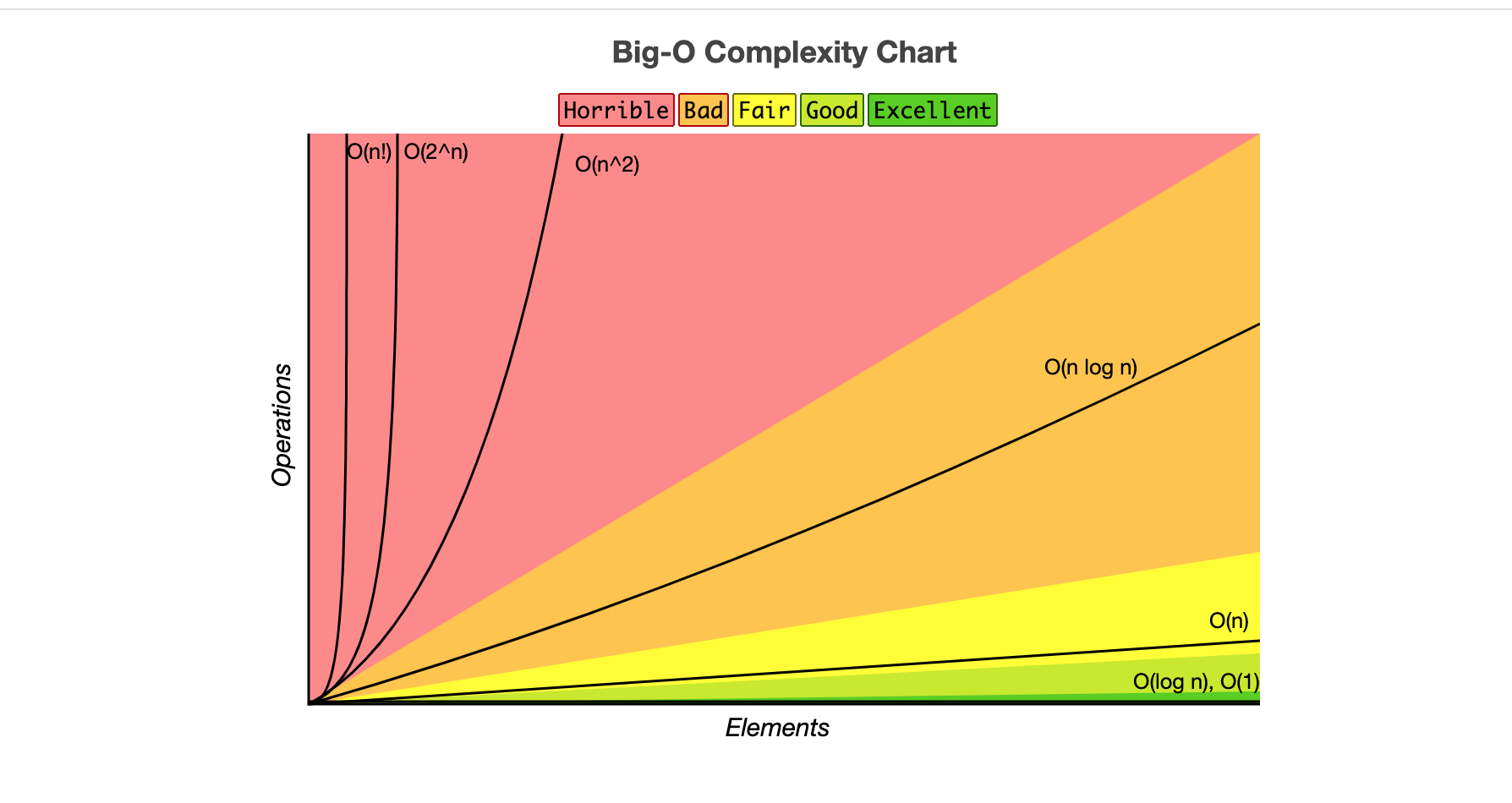
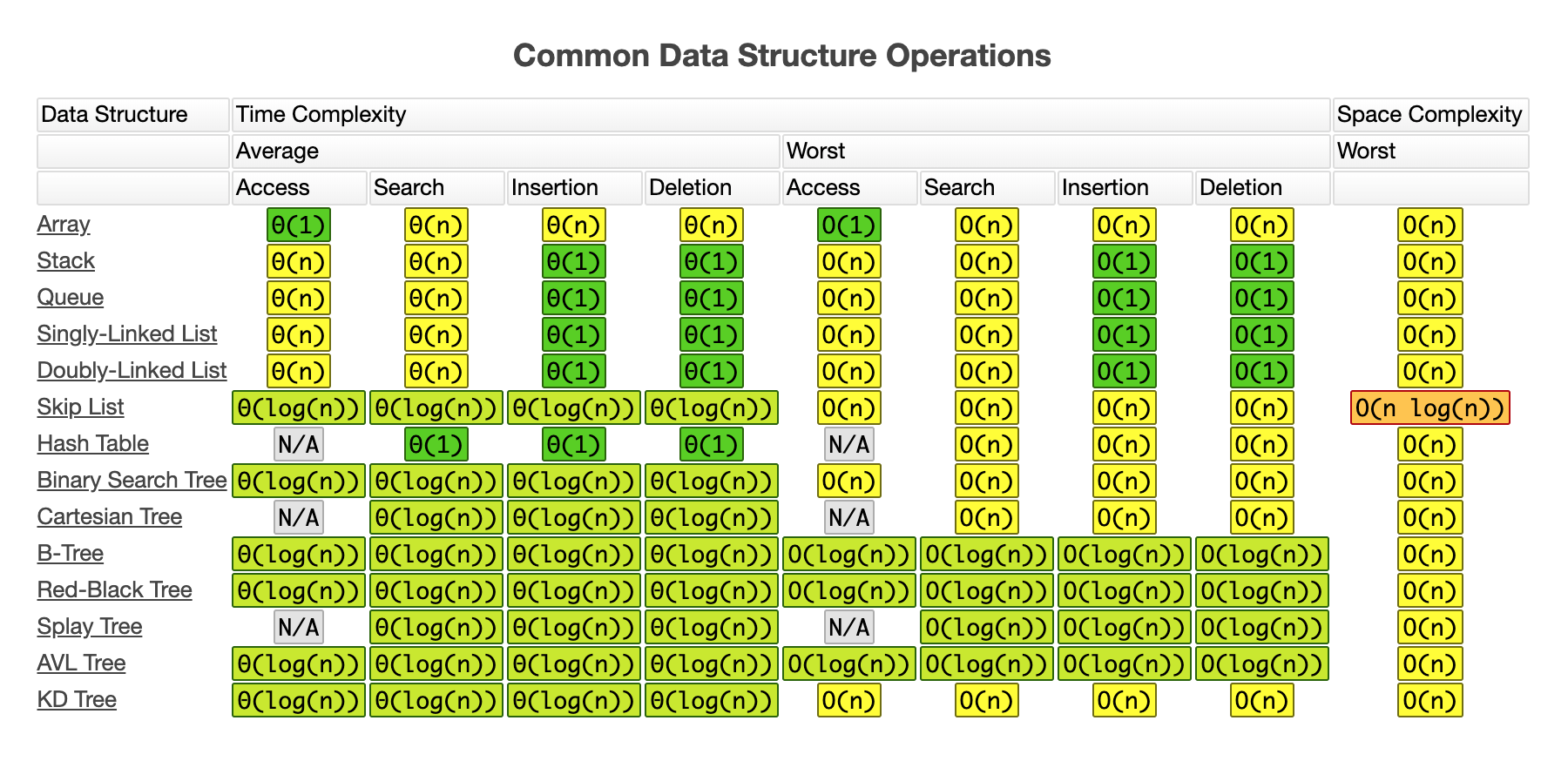
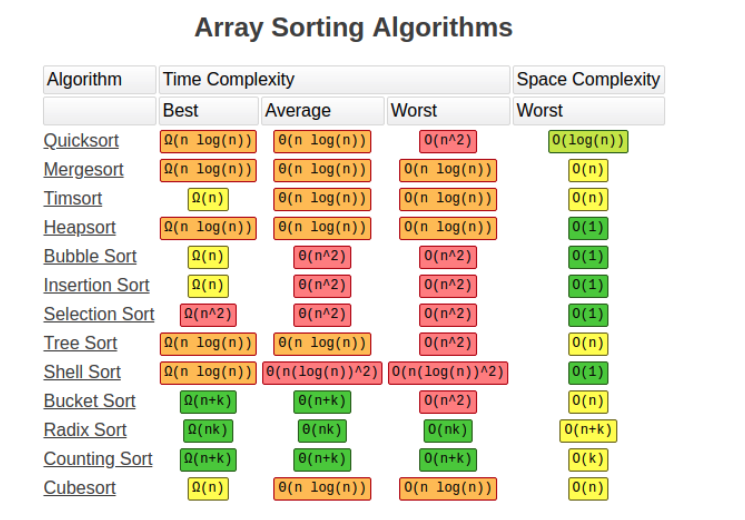
Complexity, at a glance
The reference charts, kept on the front page because they are the thing most often looked up. Source: bigocheatsheet.com.
Of the 3,275 problems indexed, 1,311 are the author's own rows and 1,964 are imported drafts from a coverage audit, marked as such in the index. Everything here is built from the markdown in the repository — corrections welcome.