Java Basics FAQ
Scope — core language mechanics: primitives vs references, strings, initialisation order,
Object’s methods, nested classes, reflection, I/O and the date/time API. See also:faq_OOP.md(OOP pillars, overriding, SOLID) ·java_collection.md(collections) ·java_exception.md(exceptions) ·java_generics.md(generics) ·jvm.md(class loading, memory, GC).
1) Primitives vs Reference Types Priority 5 of 5 — Must know — expect it in almost every loop
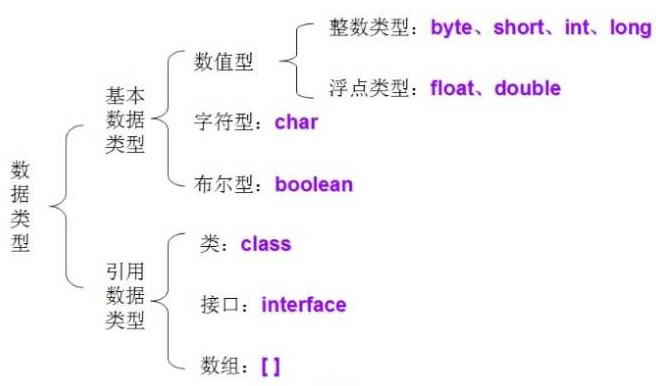
| Primitive | Bits | Range / note | Default |
|---|---|---|---|
byte |
8 | −128 … 127 | 0 |
short |
16 | ±32 K | 0 |
int |
32 | ±2.1 B | 0 |
long |
64 | ±9.2 E18 | 0L |
float |
32 | IEEE 754 | 0.0f |
double |
64 | IEEE 754 | 0.0d |
char |
16 | An unsigned UTF-16 code unit | '\u0000' |
boolean |
JVM-defined | true / false |
false |
Reference types are classes, interfaces, arrays and enums. The variable holds a
reference; the object lives on the heap. Sizes are fixed by the spec, so an int is 32
bits on a 64-bit JVM too.
Only fields get default values. A local variable must be assigned before use — the compiler enforces it.
== vs equals
== |
equals() |
|
|---|---|---|
| Primitives | Compares values | n/a |
| References | Compares identity (same object) | Compares logical equality, as the class defines it |
Object.equals is identity, so a class that does not override it behaves like ==.
String, the wrappers, List/Map etc. all override it.
// java
String a = new String("123");
String b = new String("123");
a == b;          // false — two distinct objects
a.equals(b);     // true  — same characters

String c = "123";
String d = "123";
c == d;          // true  — both refer to the same pooled literal
Autoboxing and the Integer cache Priority 4 of 5 — High value — a gap here costs you rounds
// java
Integer i = 1;      // boxing   -> Integer.valueOf(1)
int n = i;          // unboxing -> i.intValue()

Integer a = 127, b = 127;
a == b;             // true  — values in [-128, 127] come from a cache
Integer x = 128, y = 128;
x == y;             // typically false — outside the cache the JLS permits, but does
                    // not require, distinct objects. Never rely on either answer
Two consequences: always compare boxed values with equals, and beware the NPE that
unboxing hides — Integer count = map.get(k); if (count > 0) throws when the key is
missing. The ternary operator can unbox unexpectedly too:
flag ? 1 : someInteger unboxes both branches.
2) Strings Priority 5 of 5 — Must know — expect it in almost every loop
String is immutable and final. Every “modification” makes a new object, which is
what makes strings safe to share across threads, cacheable in the pool, and safe as map
keys (their hash never changes).
The string constant pool
Literals are interned in a pool held in the heap, so identical literals are one object.
new String("x") deliberately creates a second object outside the pool; "x".intern()
returns the pooled one.
// java
String s1 = "ab";                  // pooled
String s2 = "a" + "b";             // folded at COMPILE time -> the same literal
s1 == s2;                          // true

String part = "a";
String s3 = part + "b";            // built at RUNTIME -> a new object
s1 == s3;                          // false
s1.equals(s3);                     // true
String vs StringBuilder vs StringBuffer
String |
StringBuilder |
StringBuffer |
|
|---|---|---|---|
| Mutable | No | Yes | Yes |
| Thread-safe | Yes (immutable) | No | Yes (synchronized) |
| Speed | Slowest for repeated edits | Fastest | Slower than builder |
| Use | Values, keys, constants | Building a string in one thread — the normal case | Legacy; a shared buffer (rare) |
Concatenation in a loop is the classic mistake: each += allocates a new string and
copies, making it O(n²). Use a StringBuilder. (A single-expression a + b + c is
already compiled into one builder / invokedynamic call, so it is fine.)
3) Operators & Numeric Gotchas Priority 3 of 5 — Worth knowing — usually a variant of a must-know pattern
// java
int a = 5;
int b = a++;    // b = 5, then a = 6   (post-increment: assign, then add)
int c = ++a;    // a = 7, then c = 7   (pre-increment:  add, then assign)
- Integer division truncates:
5 / 2 == 2;5 % -2 == 1(the sign follows the dividend). - Silent overflow:
Integer.MAX_VALUE + 1wraps toInteger.MIN_VALUE. UseMath.addExactto throw instead, andleft + (right - left) / 2in binary search. - Floating point is inexact:
0.1 + 0.2 != 0.3. UseBigDecimal(constructed from a string, not a double) for money. &&/||short-circuit;&/|do not (and also work bitwise).>>keeps the sign,>>>shifts in zeros.
4) Variables, static and final Priority 4 of 5 — High value — a gap here costs you rounds
| Member variable (成員變數) | Local variable (局部變數) | |
|---|---|---|
| Declared in | The class body | A method or block |
| Lives in | Heap (with the instance), or the class’s metadata if static |
The thread’s stack frame |
| Lifetime | As long as the instance / the class | Until the block exits |
| Default value | Yes | No — must be assigned |
| Access modifiers | Allowed | Not allowed (only final) |
static binds to the class, not an instance: one copy, shared, accessible as
ClassName.member, initialised when the class is initialised. A static method cannot
touch instance state or this, and it is hidden, not overridden, in a subclass —
dispatch happens on the reference type at compile time.
Use static for constants (static final), stateless helpers and factory methods. Mutable
static state is shared across every thread in the JVM — a common source of both races
and memory leaks.
final: a final variable cannot be rebound (the object it points to can still
mutate), a final method cannot be overridden, a final class cannot be extended.
final fields also carry safe-publication guarantees — see jmm.md.
Initialisation order
first use of the class →  static fields + static blocks   (once, in source order)
new Foo()              →  instance fields + instance blocks
                       →  constructor body (after its implicit/explicit super(...))
Superclass initialisers always complete before the subclass’s. This is why calling an overridable method from a constructor is dangerous: the subclass’s fields are still at their defaults when its override runs.
5) Object’s Methods Priority 4 of 5 — High value — a gap here costs you rounds
Every class inherits these, and the first three are asked about constantly:
| Method | Contract |
|---|---|
equals(Object) |
Reflexive, symmetric, transitive, consistent; x.equals(null) is false |
hashCode() |
Equal objects must have equal hash codes; override it whenever you override equals |
toString() |
Override it — the default Foo@1b6d3586 is useless in logs |
getClass() |
The runtime class (final) |
clone() |
Shallow copy; needs Cloneable, else CloneNotSupportedException |
wait / notify / notifyAll |
Monitor coordination — see java_multi_thread.md |
finalize() |
Deprecated; never rely on it. Use try-with-resources or Cleaner |
// java
@Override public boolean equals(Object o) {
    if (this == o) return true;
    if (!(o instanceof Point p)) return false;     // pattern matching, Java 16+
    return x == p.x && y == p.y;
}
@Override public int hashCode() { return Objects.hash(x, y); }
Breaking the contract makes objects “vanish” from a HashMap/HashSet: the lookup
computes a different bucket than the insert did. A record generates both correctly —
see java_modern.md.
Shallow vs deep copy
clone() copies field values, so referenced objects are shared. A deep copy
re-creates them:
// java
// A NEW list, but the SAME hobby objects inside it — a container (one-level) copy.
Person copy = new Person(original.name(), new ArrayList<>(original.hobbies()));

// Genuinely deep: copy every element too.
List<Hobby> hobbies = original.hobbies().stream().map(Hobby::new).toList();
Person deep = new Person(original.name(), new ArrayList<>(hobbies));
For value types, prefer immutability over copying: nothing to copy if nothing can change.
6) Ways to Create an Object Priority 3 of 5 — Worth knowing — usually a variant of a must-know pattern
| Way | Example | Runs a constructor? |
|---|---|---|
new |
new Foo() |
Yes |
| Reflection | Foo.class.getDeclaredConstructor().newInstance() |
Yes |
clone() |
foo.clone() |
No |
| Deserialization | ObjectInputStream.readObject() |
No — but it does run the no-arg constructor of the first non-serializable superclass |
| Factory / builder | List.of(), Integer.valueOf(1) |
Indirectly |
The two that skip the constructor are exactly why a singleton must also defend
readResolve() and clone().
7) Nested Classes Priority 3 of 5 — Worth knowing — usually a variant of a must-know pattern
| Kind | Declaration | Holds a reference to the outer instance? |
|---|---|---|
| Static nested | static class Node |
No — the default choice |
| Inner | class Iter |
Yes — Outer.this |
| Local | Declared inside a method | Only in an instance context — not in a static method |
| Anonymous | new Comparator<>() { … } |
Only in an instance context |
An inner class keeping the outer instance alive is a real leak source (a long-lived
listener pinning an Activity/service). Make nested helper classes static unless they
genuinely need the enclosing instance. Lambdas do not create a class per instance and
their this is the enclosing one — see
java_functional.md.
8) Reflection & Annotations Priority 3 of 5 — Worth knowing — usually a variant of a must-know pattern
Reflection inspects and manipulates classes at runtime — the mechanism behind Spring, Jackson, JUnit and every DI container.
// java
Class<?> type = Class.forName("com.acme.Order");
Object instance = type.getDeclaredConstructor().newInstance();
Method m = type.getDeclaredMethod("total");
m.setAccessible(true);                 // bypasses access checks (restricted by JPMS)
Object result = m.invoke(instance);

for (Field f : type.getDeclaredFields())
    if (f.isAnnotationPresent(Column.class)) { ... }
Costs and cautions: no compile-time checking (a rename becomes a runtime failure), slower
than a direct call and harder for the JIT to inline, and it breaks encapsulation. Frameworks
cache Method/Field handles or generate bytecode to pay the cost once.
Annotations are metadata; @Retention(RUNTIME) is what makes them visible to
reflection (SOURCE is compile-time only, e.g. @Override). A dynamic proxy
(java.lang.reflect.Proxy + InvocationHandler) implements an interface at runtime and
routes every call through one handler — how @Transactional and RPC stubs work; see
java_spring.md.
9) I/O and NIO Priority 3 of 5 — Worth knowing — usually a variant of a must-know pattern
Classic java.io is stream-based and blocking; java.nio adds buffers, channels and
non-blocking selectors.
| Byte streams | Character streams | |
|---|---|---|
| Base classes | InputStream / OutputStream |
Reader / Writer |
| For | Binary data | Text (they apply a charset) |
| Buffered wrapper | BufferedInputStream |
BufferedReader |
// java
// Modern, and enough for most needs:
String text = Files.readString(Path.of("in.txt"));                 // 11+
List<String> lines = Files.readAllLines(path, StandardCharsets.UTF_8);
try (Stream<String> stream = Files.lines(path)) { ... }            // lazy, closeable

// FileReader/FileWriter take a Charset since Java 11 — always pass one
try (var in  = new BufferedReader(new FileReader("in.txt", StandardCharsets.UTF_8));
     var out = new BufferedWriter(new FileWriter("out.txt", StandardCharsets.UTF_8))) {
    in.transferTo(out);
}
Rules: always specify the charset (the platform default differs across machines — UTF-8 became the default only in Java 18), always buffer (an unbuffered per-byte read is a syscall per byte), and always close via try-with-resources.
NIO matters for servers: one thread can watch thousands of connections through a
Selector, which is how Netty and non-blocking servlet containers scale. With virtual
threads (Java 21) plain blocking code reaches similar scale — see
java_modern.md.
Serialization and transient
Implementing Serializable lets the JVM write an object graph to bytes. A field marked
transient is skipped — use it for secrets (passwords, tokens), caches and anything
not part of the persistent state (an open connection, a logger).
// java
public class User implements Serializable {
    private static final long serialVersionUID = 1L;   // pin it — see below
    private String name;
    private transient String password;                 // never written out
}
Java serialization is best avoided in new code: it is a well-known deserialization-attack surface, couples your class shape to your wire format, and skips constructors. Prefer JSON/Protobuf with an explicit schema.
10) Date & Time (java.time) Priority 3 of 5 — Worth knowing — usually a variant of a must-know pattern
The Java 8 API replaced Date/Calendar, which were mutable and not thread-safe.
| Class | Represents |
|---|---|
LocalDate / LocalTime / LocalDateTime |
A date/time with no zone — a birthday, an opening hour |
Instant |
A point on the UTC timeline — what you store and log |
ZonedDateTime |
An instant rendered in a zone, DST-aware |
Duration / Period |
Machine time (seconds) / human time (months, days) |
// java
Instant now = Instant.now();                                  // UTC, immutable
LocalDate due = LocalDate.now().plusDays(30);                 // returns a NEW value
ZonedDateTime local = now.atZone(ZoneId.of("Asia/Taipei"));
Duration.between(start, end).toMillis();
All of these are immutable and thread-safe, unlike SimpleDateFormat — which needs a
ThreadLocal or, better, replacing with DateTimeFormatter.
11) Common Interview Q&A
Q: Is Java pass-by-value or pass-by-reference? Always pass-by-value — but for objects the value passed is the reference. So a method can mutate the object you passed, and cannot make your variable point somewhere else.
Q: Why is String immutable?
Thread safety without synchronisation, the constant pool (sharing would be unsafe
otherwise), a cacheable hashCode for map keys, and security — a validated file path or
URL cannot be changed after the check.
Q: a++ vs ++a in an expression? See §3.
Q: Can you override a static method?
No. Redeclaring it in a subclass hides it; the reference type decides which runs.
Q: What does final on a parameter or a collection buy you?
Only that the binding cannot change. final List<String> xs can still be added to;
use List.copyOf(xs) for an unmodifiable one.
Q: int vs Integer — when does it matter?
Nullability (Integer can be null), identity comparison (== on boxed values),
performance (boxing allocates), and collections (they store objects only).
Q: What is serialVersionUID?
The version stamp deserialization checks. Omit it and the serialization runtime
computes one from the class shape, so almost any change makes old bytes unreadable
(InvalidClassException). Pinning it keeps compatible changes (adding a field,
adding a method) readable — it cannot rescue incompatible ones such as removing a field
or changing its type.
Q: throw vs throws? See java_exception.md.
12) Recap Checklist
[ ] Primitive vs reference; defaults; == vs equals
[ ] Integer cache, autoboxing NPEs
[ ] String immutability, the constant pool, StringBuilder in loops
[ ] Integer overflow, floating point, BigDecimal for money
[ ] static/final semantics; static methods are hidden, not overridden
[ ] Static → instance → constructor initialisation order
[ ] Object's methods, and the equals/hashCode contract
[ ] Shallow vs deep copy; the five ways to create an object
[ ] static nested vs inner class, and the leak an inner class causes
[ ] Reflection: what it enables, what it costs; RUNTIME retention
[ ] Charsets, buffering and try-with-resources for I/O; transient
[ ] java.time: Instant for storage, LocalDate for calendar dates
References
- JavaGuide — Java basics
faq_OOP.md·java_collection.md·java_exception.md·java_generics.mdjvm.md— class loading, memory areas and GCjava_functional.md·java_modern.md